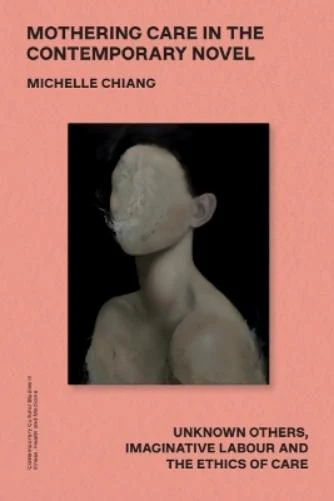
Mothering Care in the Contemporary Novel
Unknown Others, Imaginative Labour and the Ethics of Care
Explores contemporary depictions of less-than-adequate mothers to show how caring does not rest on empathy but on other-centredness.
Examining contemporary depictions of less-than-adequate mothers, Michelle Chiang reveals how care relations are fundamentally othering experiences, even between a mother and a child. Employing maternal theory and phenomenological philosophy as lenses to analyse the selected novels, Chiang offers an account of the imaginative labour that goes into caring for an other who is not entirely knowable. She argues that carers must imaginatively labour to confront the limits of their knowledge in care relations. When carers fail to exercise a dynamic imagination to confront the limits of their knowledge, they risk losing sight of the cared-for as an individual inhabiting time orientations and contextual spaces that might differ from theirs. In doing so, care may collapse into a search for certainty and control, which almost always entails the violence of coercion.
Product Information
Product Information
Shipping & Returns
Shipping & Returns
Description
Unknown Others, Imaginative Labour and the Ethics of Care
Explores contemporary depictions of less-than-adequate mothers to show how caring does not rest on empathy but on other-centredness.
Examining contemporary depictions of less-than-adequate mothers, Michelle Chiang reveals how care relations are fundamentally othering experiences, even between a mother and a child. Employing maternal theory and phenomenological philosophy as lenses to analyse the selected novels, Chiang offers an account of the imaginative labour that goes into caring for an other who is not entirely knowable. She argues that carers must imaginatively labour to confront the limits of their knowledge in care relations. When carers fail to exercise a dynamic imagination to confront the limits of their knowledge, they risk losing sight of the cared-for as an individual inhabiting time orientations and contextual spaces that might differ from theirs. In doing so, care may collapse into a search for certainty and control, which almost always entails the violence of coercion.